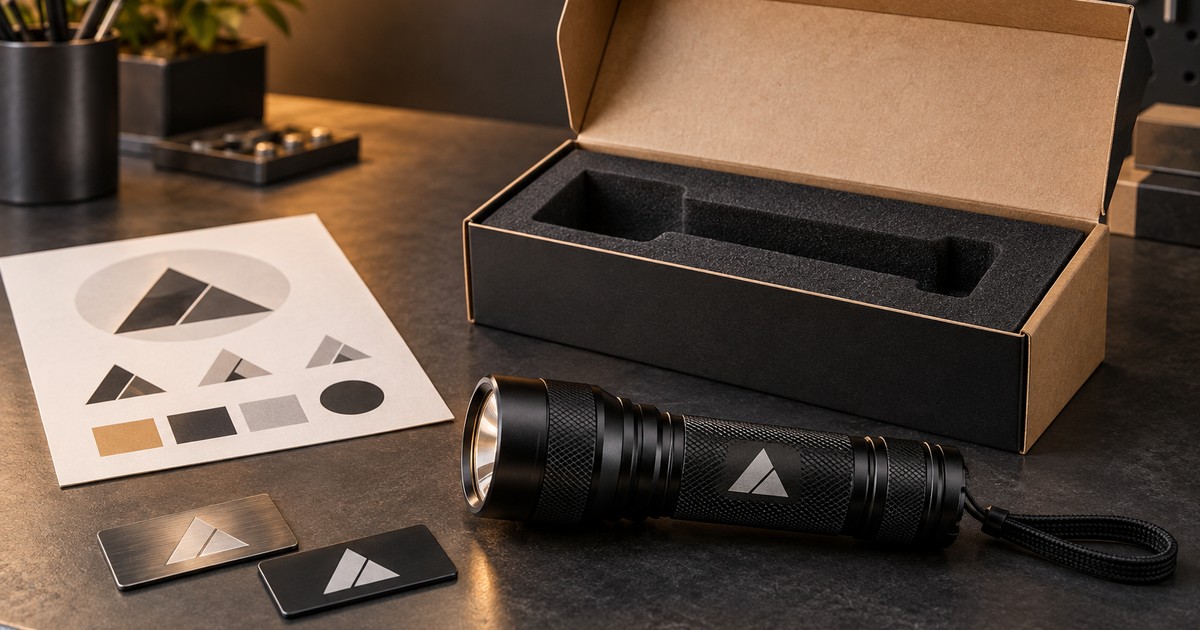
Reliable flashlight wholesale distributors must fit the way you plan to sell and present the product. Before comparing Flashlight suppliers, decide whether you need existing branded inventory, an approved decoration service or a private-label range. Each route requires different permissions, samples and commercial responsibilities.
A supplier can be legitimate yet unsuitable for your project. A stock account may not allow repackaging, a logo service may not include product development, and an own-brand brief may require a factory rather than a distributor. Qualification should establish those boundaries before artwork or inventory is ordered.
Map your brand requirements before requesting accounts
Requirement
Question for the candidate
Branded resale
Can I use this account for my intended sales channels?
Product imagery
Which images and descriptions may I use?
Logo decoration
Who can authorize the mark and its placement?
Retail packaging
Is repackaging permitted and what must remain?
Own-brand configuration
Can the supplier document a private-label agreement?
Repeat orders
How are product and artwork revisions controlled?
Verify identity and authority in separate steps
Confirm the company that sells, invoices and receives payment. Then verify its relevant brand relationship through an official route. Those are separate questions: a real business can still lack permission for your proposed channel or modification.
Ask the seller to describe its role clearly. Is it a brand distributor, authorized dealer, independent importer, decorator or manufacturing partner? Record which company approves changes and which company is responsible if the delivered product differs from the order.
Confirm resale and decoration permissions in writing
Describe the stores, websites, marketplaces and territory where the item will be sold. Identify any planned change to the logo, body finish, label, box or instructions. Ask for applicable policies and the approval route for the exact proposal.
A bulk discount does not itself provide permission to replace a brand identity or alter packaging. Resolve those questions before creating product pages or ordering printed materials. Use an agreed private-label route when a product under your own brand is the actual goal.
Request a quotation built around the final retail unit
Product model, revision and complete configuration.
Battery, charging items and accessories.
Authorized decoration and artwork scope.
Retail box, labels and instructions.
Quantity by model, color and printed version.
Sample, proof and final-approval stages.
Delivery scope and procedures for defects or deviations.
Separate standard goods from decoration, packaging, setup, samples and other agreed work. Ask which minimums and dates depend on your artwork approval. Compare candidates on the same scope, with assumptions and exclusions visible.
Use an approval sequence that catches different risks
First assess an unmodified sample to establish whether the platform fits the intended customer. Where decoration is authorized, approve a digital proof and a decorated sample when finish or appearance matters. Finally review the complete product, accessories and retail package together.
A proof establishes layout without demonstrating every property of the finished item. A stock sample establishes the platform without approving custom packaging. Record which decision each sample closes and what remains outstanding.
Keep one controlled product and artwork revision
Connect the accepted sample, product specification, logo files, packaging and instructions to a revision reference. Designate the person who can approve changes. Keep earlier drafts clearly separated from the accepted files so the supplier is not working from conflicting messages.
Require notice when important components, accessories, colors or printed claims change. Decide whether a proposed substitution needs a new sample, proof or listing update. The delivered SKU should remain traceable to the product your customers saw.
Check whether after-sales support fits your retail promise
Keep your customer policy distinct from the supplier’s agreement. Make sure staff can identify the product and bundle from the invoice and item record. A reliable supplier should give clear answers about responsibility before the first customer problem occurs.
Test the relationship before a full launch
Use a manageable pilot to review product consistency, artwork, packaging, quantities, paperwork and communication. Record discrepancies with the approved reference and observe how the seller resolves them. Expand the program only after the operating process is understood.
Evaluate Lebote for an own-brand sourcing discussion
Compare Flashlight suppliers on a factory brief when your needs extend beyond standard branded distribution. Review Lebote’s catalog, select candidate platforms and send the intended customer, channel, quantity, battery, accessories, artwork and packaging requirements to Ningbo Lecho Electronics Co., Ltd.
Confirm the actual sample plan, customization, minimums, available information and delivery terms. This is a factory-direct comparison, not a claim of US stock. Related resources include the private-label sourcing guide and US distributor comparison.
Frequently asked questions
Q: How can a retail brand verify a wholesale flashlight distributor?
A: Check legal identity, verify the relevant brand relationship through official contacts and confirm your sales channels and proposed modifications. Compare the full retail configuration, approvals and after-sales responsibilities before testing an order.
Q: Does wholesale access allow me to change the logo or packaging?
A: Do not assume it does. Ask the appropriate brand or authorized seller to approve the exact modification. Use an agreed private-label arrangement when you intend to sell the product under your own identity.
Q: Which approvals help verify a custom resale product?
A: Approve the platform, permitted artwork, decorated sample where needed, accessories, labels, instructions and final retail package. Keep all accepted materials under one product and artwork revision.
Q: What should I watch during a pilot order?
A: Compare delivered units and packages with the approved reference. Check quantities, decoration, paperwork, communication and how discrepancies are resolved before committing to a wider launch.
Q: How to Find Reliable Flashlight Wholesale Distributors
A: Define your brand strategy, verify the seller and relevant permissions, normalize the complete retail unit, approve samples and control revisions. Reliability is demonstrated through consistent delivery and clear responsibility for issues, not account approval alone.
The best US wholesale flashlight distributor for your business depends on whether you want established branded stock, approved decoration or a new private-label product. Fenix Lighting, the Ledlenser USA wholesale route and SWPS are contacts worth evaluating, while COAST offers direct dealer access. Review these options alongside other Flashlight suppliers with your brand strategy defined first.
The shortlist describes published routes to a commercial conversation. It does not guarantee account approval, stock or customization rights. A strong brand program starts by confirming what the purchasing agreement allows and what the supplied product will actually be.
Published US purchasing routes to investigate
Fenix Lighting: a US distributor and retailer contact
SWPS describes itself as an authorized Streamlight stocking distributor. Request resale-account eligibility, a model-specific quote and current availability. Independently verify authorization through the brand; the presence of a retail checkout does not establish your business terms.
COAST Dealer: a direct brand wholesale alternative
The COAST Dealer portal serves wholesale and direct customers and offers an access application. This is a brand account route rather than an independent multi-brand distributor. Confirm whether it fits your intended retail channels and assortment.
Distinguish branded inventory from a custom product
A distributor account normally concerns a product supplied under an existing brand. A decorated business gift may add an approved logo while retaining that identity. A private-label product is supplied under your own retail presentation. Explain which outcome you need rather than asking only for a wholesale price.
Project
Question for the seller
Established branded resale
Are my store and online channels approved?
Logo engraving or decoration
Who authorizes the change and warranty wording?
Custom retail package
Is repackaging allowed and what information must remain?
Own-brand product line
Can the supplier provide an agreed private-label platform?
Repeat custom order
Which product and artwork revisions will be repeated?
Confirm permissions before preparing branded artwork
Buying inventory does not automatically give permission to alter another brand’s logo, remove marks or create new warranty claims. Ask the appropriate brand or authorized seller about the exact proposal. Obtain written approval before developing a sales listing or ordering printed packaging around that change.
If the seller offers a decoration service, identify the approved product, available decoration area, proof process and final package. If it does not, do not assume that a third party can modify the item while preserving every original term. Resolve ownership, claims and support responsibilities before production.
Ask for complete retail content and support information
Exact manufacturer part number and included accessories.
Product imagery and descriptions approved for reseller use.
Instructions, labels and charging requirements for the supplied version.
Applicable sales channels and advertised-pricing policies.
Process for faulty goods, returns and customer questions.
Permission and approval steps for any proposed decoration.
Build your product page from the current approved information rather than copying unrelated listings. Keep package contents and configuration clear. When the supplier changes an accessory or revision, review whether images, descriptions or instructions need updating before the next shipment reaches customers.
Use separate approvals for product, artwork and packaging
Start with a sample of the actual product configuration. If decoration is permitted, review a proof and request a decorated sample when appearance or finish matters. Then examine the package and instructions together. A digital layout can approve position and proportion without proving every property of the finished item.
Connect the accepted sample, artwork files and packaging to one revision record. Designate the person who approves it. Avoid sending multiple informal versions through different contacts, because an unclear approval can cause a correct-looking but commercially unusable batch.
Compare distributors on the scope they actually supply
A domestic distributor quote may cover stock, standard packaging and an established support route. A custom proposal can include additional artwork, samples, decoration, printing or configuration work. Ask for these items to be separated so that the comparison reflects the final sellable unit.
Check the ordering multiple for each model, color and decorated version, and identify which dates depend on your approvals. Ask how the seller handles cancellation or changes after approval. Do not base an event or product launch on an estimated schedule that has not been confirmed for the actual work.
Compare a private-label factory route when needed
If your goal is an own-brand line, review Flashlight suppliers that can discuss a complete platform and package. Lebote’s catalog is a starting point for an inquiry to Ningbo Lecho Electronics Co., Ltd. Treat this as a factory option separate from a US branded-distribution account.
Send the customer segment, channels, destination market, selected platform, quantities, battery, accessories, artwork, packaging and sample plan. Confirm what is available and ask for an itemized proposal. US inventory, decoration options and delivery dates must be established in the actual agreement.
Test the account and customer experience with a pilot
Use a manageable order to assess product consistency, package condition, invoicing, communication and issue resolution. Check whether the materials supplied are sufficient for your retail team to answer ordinary customer questions. Record any gap before expanding the assortment or preparing a larger campaign.
Q: Which US distributor routes can support branded flashlight retail?
A: Consider Fenix Lighting, River City Distributors through Ledlenser USA, and SWPS for its published Streamlight route. COAST Dealer is a direct-brand alternative. Confirm your account, territory and sales channels with each provider.
Q: Can I add a logo to any flashlight bought from a distributor?
A: Do not assume permission. Ask the brand or authorized seller to approve the exact decoration, product and package. Clarify how the change affects product information, warranty wording and customer support.
Q: When should I use a private-label factory instead of a distributor?
A: A factory route may fit an own-brand platform, configuration or packaging program. Compare its full scope, samples and approvals against a distributor’s branded stock offer, and confirm all commercial and delivery assumptions.
Q: What should I approve for a decorated resale product?
A: Approve the product configuration, authorized artwork and placement, decorated sample where needed, accessories, instructions and final package. Keep those approvals under one revision record for production and repeat orders.
Q: What Are the Best Wholesale Flashlight Distributors in the US?
A: Choose the published purchasing route that matches your brand strategy. Verify resale and decoration permissions, compare the complete package and support scope, and test the account with a pilot. Use a separate factory proposal when an own-brand program is the real requirement.
Retailers comparing Flashlight suppliers should decide whether they want established branded stock or a product sold under their own name. The decision changes which supplier route to approach and which approvals matter. This guide compares official wholesale starting points and explains how a retailer can evaluate a factory proposal alongside branded inventory.
The shortlist is organized around purchasing fit rather than an audited quality ranking. Published account or application pages establish a contact route; they do not guarantee approval, current stock or permission for every resale channel. Confirm those points for your own project.
A supplier shortlist for branded and own-brand retail
1. Lebote: a direct factory discussion for planned programs
Start with the Lebote flashlight catalog when evaluating a factory route. Send the required model, quantity, battery, packaging and branding brief to Ningbo Lecho Electronics Co., Ltd. Confirm samples, customization, MOQ and delivery terms for the exact configuration.
2. COAST: a branded dealer relationship
COAST provides an official dealer-inquiry route. Retailers can use it to discuss an account and the relevant product range. Request the current account requirements, permitted sales channels, order quantities, product data and replenishment terms.
Fenix Lighting accepts retailer applications. It is a useful starting point for retailers considering that brand. Ask about current eligibility, product information, channel permissions, warranty handling and the complete retail package before committing inventory.
5. Ledlenser USA: a published wholesale partnership program
The Ledlenser USA wholesale page identifies River City Distributors as its US master distributor and provides an application route. Confirm applicable territory, model availability, ordering requirements and current dealer policies directly with the program.
Match the supplier model to your brand strategy
Retail strategy
Useful route
Key approval
Sell an established lighting brand
Authorized retailer or distributor account
Channel permission and exact retail SKU
Offer a decorated standard product
Supplier with confirmed decoration rights
Logo proof and decorated sample
Launch an own-brand range
Factory or qualified private-label partner
Final configuration, packaging and artwork
Develop a substantially new product
Engineering-capable manufacturer
Design revision and production-representative sample
A dealer account and a private-label agreement are different commercial arrangements. Buying an existing brand in volume does not automatically authorize replacing its logo or changing its packaging. State the desired branding outcome at the start and ask which company can approve it.
Choose a suitable flashlight platform before applying your logo
Describe the intended buyer, store category, use case and product position. Test whether the base product fits that job before investing in artwork. Check grip, switch, charging interface, beam, battery and the accessories the customer will expect in the box.
Separate decoration from functional changes. Adding a logo to an accepted platform can be a different project from changing electronics, the housing, modes or charging. Ask the supplier which requests use existing processes and which need development, revised samples or additional verification.
Approve the complete retail identity
Supplier model linked to the retailer’s own SKU.
Final logo files, decoration location, scale and color references.
Product configuration, accessories and battery identity.
Retail box, instructions, labels and agreed product claims.
Product identifiers and carton contents.
A revision number connecting the approved sample and files.
A digital proof confirms a layout; it does not establish every property of a finished decoration. Request a decorated sample where appearance, handling or the finish matters. Review the packaged item as a customer would receive it, including the instructions and any charging accessories.
Ask Flashlight suppliers for a project-level quotation
Send the same brief to candidate Flashlight suppliers. Include the intended channel, destination market, selected platform, quantity per model and color, logo, packaging, accessories and sample plan. Ask for an itemized response that identifies assumptions and exclusions.
Keep standard product, decoration, packaging, samples, tooling or setup and other agreed work visible. Ask how minimum quantities apply to the body color, printed box or customized component. One overall quantity may not satisfy every production minimum, and mixed models may not share the same ordering multiple.
Control sample stages and production release
Use a base sample to evaluate function, a decorated sample to approve branding and a final representative package to approve the sellable configuration. Record which decisions each sample closes. Designate the person who can approve revisions so that the supplier is not working from conflicting artwork or informal comments.
Release the production revision only when product, decoration, accessories and packaging agree with the written order. If an important component or printed claim changes, decide which approval must repeat. Keep reference files available for inspection and replenishment.
Prepare retail content from approved evidence
Use photographs you own or have permission to use, and write product descriptions from the configuration you actually approved. Clarify package contents, charging needs and the relevant operating modes. Verify any performance or protection claim before placing it on a product page or retail box.
Define support responsibilities alongside the product. Agree how a retailer reports faults, what records are required, which party decides replacements and how spare parts or replacement goods are handled. The customer’s experience should remain coherent when an own-brand item needs service.
Use a small launch to learn before expanding the range
Begin with models that fill distinct needs and can be explained clearly by your sales team. Track sell-through, customer questions, defects, packaging damage and reorder accuracy. Use this evidence to improve the specification or remove weak variants before committing to a larger range.
Keep the original approved sample and artwork connected to each repeat purchase order. Ask suppliers to disclose changes to the battery, cable, driver, finish or package instead of substituting a similar-looking part without discussion.
Discuss a retail project with Lebote
Review the Lebote flashlight catalog for candidate platforms and submit your own-brand requirements. Confirm the available decoration, configuration, samples, MOQ, documentation and delivery terms for the selected project. A clear brief makes the proposal easier to compare with branded wholesale alternatives.
Related resources include the private-label sourcing guide and the bulk resale buying guide. Use the supplier shortlist to start conversations, then select the partner on its response to your actual requirements.
Frequently asked questions
Q: Which flashlight suppliers fit a private-label retail project?
A: Compare manufacturers or qualified private-label partners that can document the product platform, configuration, decoration and complete retail package. Lebote provides a catalog starting point for such discussions; confirm available work and terms for your selected model.
Q: Can a retailer rebrand any wholesale flashlight?
A: Do not assume so. An existing branded product may have restrictions on decoration or repackaging. Obtain the relevant permission or establish an agreed private-label arrangement before developing your own retail identity.
Q: What samples should I approve for private-label stock?
A: Approve the base platform, decorated product and final packaged configuration. Keep the written specification, artwork, accessories, labels and instructions connected to the same approved revision.
Q: How do I compare branding quotations from suppliers?
A: Give each supplier the same project brief and compare product, decoration, packaging, samples, setup, quantity minimums and delivery scope. Ask for deviations, assumptions and exclusions instead of comparing only the headline unit price.
Q: Top Wholesale Flashlight Suppliers for Retailers
A: Match the supplier route to branded resale or private label, verify account and branding permissions, approve a suitable platform and retail package, and retain the final revision for production and repeat orders. Compare official brand channels with a complete factory proposal.
If you want to buy flashlights in bulk for resale, begin by deciding whose brand you will sell. Established branded goods usually require the correct wholesale channel; an own-brand product calls for a supplier that can approve your configuration, decoration and packaging. A Flashlight Manufacturer becomes particularly relevant when branding must remain consistent across repeat orders.
The most useful supplier is the one that fits your retail promise. A compact gift item, a specialist outdoor light and a rechargeable work flashlight create different demands for samples, instructions, presentation and service. Define the intended customer before asking a supplier to print a logo.
A business marketplace can help discover suppliers and compare assortments. Faire describes its service as connecting independent brands with retailers; check current flashlight availability and each brand’s terms. A marketplace account does not establish that every seller manufactures the goods or allows every resale channel.
Direct flashlight factories
A Flashlight Manufacturer is worth evaluating when you need a repeatable model, planned volumes or an own-brand program. Use the Lebote catalog to identify candidate platforms, then request the configuration, sample, minimum quantities and delivery scope for your actual project. Confirm the contracting entity and production role.
Choose between branded resale, white label and private label
In branded resale, the original brand and its approved presentation remain central to the product. A white-label arrangement generally starts with a standard product offered to multiple buyers. A private-label program specifies how the selected platform, packaging and brand presentation will be supplied under your name. Sellers use these terms differently, so describe the required deliverables rather than relying on the label alone.
Decision
Question to resolve
Brand ownership
Will you resell the existing brand or use your own?
Product platform
Is the standard model adequate before customization?
Decoration
What logo method, location and artwork revision are approved?
Retail package
Which box, instructions, labels and accessories form the sellable SKU?
Repeat order
How will components, artwork and package revisions be controlled?
Select the product before designing the package
Test the platform against its intended use. Check handling, beam, controls, charging access, accessory fit and the modes a customer will actually use. A good-looking logo cannot compensate for an awkward switch or an unsuitable battery arrangement. Narrow the range to products with clear roles rather than launching many nearly identical models.
Discuss the exact configuration with the supplier, including any feature that differs from a stock sample. Ask which requested changes are straightforward decoration, which alter the product configuration and which require engineering work. Each category can require different approvals and cost assumptions.
Approve artwork and packaging as controlled deliverables
Send usable logo files and define the intended decoration area, proportions and color references. Obtain a proof on the actual product outline. Where finish and appearance matter, request a decorated sample rather than treating a digital layout as evidence of the final result.
Approve the product model, color and final accessory bundle.
Check logo placement, scale, readability and agreed finish.
Reconcile the unit box, product identity and package contents.
Review instructions and claims against the actual configuration.
Assign a revision to artwork, labels and packaging.
Keep approved samples and files for production and replenishment.
Have one designated decision maker approve the final files. Record what was accepted and when. If a later change affects a barcode, battery, cable, body finish or printed claim, determine which checks must be repeated before the next production batch.
Ask a Flashlight Manufacturer for a complete project quote
A clear inquiry helps a Flashlight Manufacturer distinguish a logo job from a new development program. Provide the intended resale channel, customer, destination market, model, quantities per color, battery and accessories, artwork, packaging and sample needs. Include the required receipt window and identify who can approve the project.
Request separate figures for standard goods, decoration, packaging, tooling or setup, samples and other agreed work. Ask how quantity minimums apply to each version. A shared logo across several models does not necessarily combine their component or printed-package minimums. Make quote assumptions and exclusions visible.
Use samples that represent what customers will receive
An undecorated platform sample can validate core function, but it does not approve the complete own-brand SKU. Review the decorated product, accessories, instructions and retail pack together before authorizing the final production revision. Reconcile each sample with a written specification so that the supplier knows which features are controlled.
For shipment inspection, compare finished units and packaging with that reference set. Record defects by type and agree how issues are corrected before release. On receipt, preserve evidence of shortages, damage or configuration differences and follow the agreed claim process.
Plan product listings and after-sales support
Build your listing from the verified configuration and approved evidence. Use product images you own or have permission to use. Avoid importing unverified output, runtime, waterproofing or safety claims from an unrelated model. Make package contents and charging requirements clear so that customers know what they are buying.
Define who handles customer questions, warranty decisions, replacement parts and product faults. Retain the link between supplier model, buyer SKU and production revision. This makes it easier to identify affected inventory and keep the next order aligned with the product your customers already recognize.
Discuss your resale project with Lebote
Review the Lebote flashlight range to select candidate platforms, then send your own-brand brief. Confirm the available customization, model-specific information, sample plan, quantity requirements and delivery terms in writing. A catalog image starts a discussion; the signed specification and approved sample define the order.
Q: Where can I buy flashlights in bulk for my own brand?
A: Look for a manufacturer or qualified private-label supplier that can supply an appropriate platform and document your decoration, configuration, accessories and packaging. Compare samples and full project quotations before selecting the supplier.
Q: Can I add my logo to any flashlight I buy wholesale?
A: Do not assume this is allowed. Branded resale stock may have restrictions on modification or repackaging. Ask the relevant rights holder or authorized supplier about permission, and use an agreed private-label arrangement when your own brand is required.
Q: Which samples are needed for private-label flashlight resale?
A: Use a platform sample to assess function, a decorated sample to approve branding and a final production-representative package to reconcile the complete SKU. Keep the approved specification, artwork, accessories and packaging together.
Q: What should I send a flashlight manufacturer for a resale quotation?
A: Send the customer and sales channel, destination, preferred model, quantity per version, battery and accessories, logo files, packaging, sample needs and receipt window. Request itemized pricing, assumptions, exclusions and approval milestones.
Q: Where Can I Buy Flashlights in Bulk for Resale?
A: Choose authorized wholesale channels for an existing brand or a qualified Flashlight Manufacturer for an own-brand program. Define the retail product, approve function and branding, confirm the complete package and control the production revision before increasing order volume.
For a custom-product buyer, the best places to buy Flashlight Wholesale in the US are the ones that can support the right level of branding. A printed giveaway, an authorized branded resale assortment and a new private-label product are separate projects. Choosing the supplier route first makes the artwork, sample and purchasing decisions much clearer.
This article focuses on buyers planning logo gifts, business equipment and branded retail products. The channels below have published purchasing pages, but this is a fit-based shortlist rather than an audited ranking. Confirm current availability and project terms directly before committing.
Decide what “custom” means in your order
Logo decoration changes how an existing flashlight is presented. A configured program may also change the body color, accessories, printed packaging or selected options. Product development can involve the housing, electronics, optic, firmware or tooling. Ask suppliers which work they perform themselves and which changes require factory approval.
Project type
Likely sourcing route
Approval that matters
Event giveaway with a logo
Promotional-product supplier
Logo proof and decorated sample
Branded stock for resale
Approved dealer or distributor
Channel authorization and exact retail SKU
Company equipment
Business purchasing program
Usability sample and issue-ready package
Own-brand catalog product
Factory or qualified private-label supplier
Final configuration, artwork and package
New engineered platform
Development-capable manufacturing partner
Engineering revision and production-representative sample
US purchasing places to put on your shortlist
Crestline custom flashlight range
Crestline lists logo-personalized flashlights with item-specific minimum quantities. It suits promotional sourcing research. Request the decoration proof, battery details, sample, complete price and committed delivery date for the exact item. See the official purchasing page.
COAST dealer portal
COAST provides a dedicated portal for wholesale and direct customers, with an application for access. It is a useful starting point for buyers seeking a branded dealer relationship. Confirm account eligibility, assortment, current terms and shipping before ordering. See the official purchasing page.
Streamlight authorized dealers and distributors
Streamlight says it sells through authorized dealers and distributors rather than directly. Use the official network to identify a seller, then request a model-specific business quotation and confirm warranty handling and resale authorization. See the official purchasing page.
Maglite Business Builder Access
Maglite offers a business program for companies purchasing for employees. This is an employee-equipment route; buyers seeking inventory for resale should ask sales about the appropriate channel rather than assuming membership provides dealer rights. See the official purchasing page.
OnTimeSupplies bulk flashlight category
OnTimeSupplies lists flashlights from several brands and offers bulk purchasing on selected listings. Check the actual unit of measure: an each, carton or case can represent very different order quantities and costs. See the official purchasing page.
Use a promotional supplier for a defined decoration job
For conferences, staff gifts and customer promotions, start with a usable standard product that already fits the occasion. Specify the logo file, print location, color, packaging and delivery destination. Give the supplier the date goods must be received, not only the event date, so that you have time to check the shipment.
Request a proof showing the actual decoration area and logo proportions. A digital mockup verifies layout; a decorated sample gives better evidence of finish, readability and handling. Confirm who approves artwork and what changes trigger another proof. Ask about setup charges, additional locations and repeat-order artwork retention.
Do not confuse a branded dealer account with private label
A brand’s business channel can provide a recognized product and commercial support, but it does not automatically permit removing the brand, applying another logo or changing the package. Obtain permission for any proposed decoration. If your goal is a product sold solely under your own brand, state that explicitly at the beginning.
For resale, build a record of the approved product name, part number, imagery, instructions and warranty wording. Check whether an online marketplace, your own store or regional distribution is allowed under the seller’s terms. Avoid basing a new product page on third-party images or claims that you have not been authorized to use.
Build an approval ladder for an own-brand flashlight
Platform sample: check the basic grip, beam, switch, charging and accessories.
Decorated sample: approve logo position, scale, color and durability expectations.
Pre-production sample: reconcile all approved changes on the final revision.
Shipment check: compare production units and cartons with that approved revision.
Keep each approval connected to a revision number and date. If the battery, cable, driver, finish or packaging changes, identify whether another sample or check is needed. The buyer should know which configuration a quotation covers and which configuration has actually been approved for production.
Compare custom flashlight quotations on the same scope
Ask for product and decoration costs separately. Record sample fees, artwork work, printing setup, packaging, accessories, testing, inspection and shipment charges where applicable. A low unit price can exclude the package that makes the product ready for sale or the extra approval stage that your brand requires.
Break quantities down by model, color and printed package. One design across several models may still involve different minimums, production setups and carton requirements. Ask which quantities can be combined and which cannot. A written breakdown is more useful than a general promise that the factory accepts small orders.
Where Lebote fits a US buyer’s sourcing comparison
Buyers needing a factory conversation can review Flashlight Wholesale platforms from Lebote and send a branding brief. Describe whether you need decoration, configured catalog goods or deeper changes, together with estimated quantities, accessories, packaging and delivery location.
This is an overseas factory sourcing option for comparison with US purchasing channels. Availability in a US warehouse, product-specific documents, custom features, production slots and final delivery terms need written confirmation. A factory catalog is a starting point for a proposal, not an automatic promise that every modification is available.
A practical brief for a logo or private-label inquiry
Send the use case, intended customer, sales market, preferred platform, quantity per version, battery and charging requirements, artwork, decoration location, box concept, accessories and target receipt date. Identify the person who can approve samples. Ask for a list of assumptions, exclusions and outstanding decisions with the quotation.
Q: Which US buying channel is suitable for logo flashlights?
A: A promotional supplier such as Crestline is a starting point for decorating an existing item. Request the exact product, logo proof, decorated sample, package and delivery commitment. If the project changes electronics or housing, ask a manufacturing partner about development instead.
Q: Can I put my logo on any branded flashlight bought wholesale?
A: Do not assume this is allowed. A dealer account or bulk order does not automatically grant decoration, rebranding or repackaging rights. Ask the brand or authorized seller for written permission covering your intended use.
Q: What should I approve before a custom flashlight order?
A: Approve the platform, configuration, decorated sample, artwork, labels, instructions, accessories and packaging. Use a production-representative final revision and require approval for changes to important components or printed materials.
Q: Can Lebote be compared with US wholesale channels?
A: Yes. Use a model-specific specification and branding brief to obtain a factory proposal, then compare the complete delivery and approval scope. Confirm the MOQ, price, samples, available documentation and schedule for the selected configuration.
Q: Best Places to Buy Flashlight Wholesale in the US
A: For a custom project, shortlist a promotional supplier for logo gifts, an authorized channel for branded stock and a manufacturing partner for private-label production. Match the approval stages to the degree of customization, compare complete quotations and retain the final revision for repeat orders.
A reliable led flashlight wholesaler should be able to prove more than a low price and an attractive catalog. Serious buyers need evidence that the legal supplier is real, the quoted product is controlled, the relevant compliance files match that exact model, and the factory or trading partner can repeat the approved result after the sample is signed.
This guide focuses on qualifications and observable supplier characteristics. It complements our existing wholesaler due-diligence guide, which covers RFQs, quote comparison, samples, inspection, and trial orders. Use the two together: qualifications help you screen candidates, while transaction controls protect the actual purchase.
First principle: a certificate is not the same as a reliable supplier
Supplier qualification has three different layers. Buyers often mix them together and accept a document that proves less than they think.
Company-level evidence concerns the legal entity, factory address, business scope, quality-management process, staff responsibilities, and record control.
Product-level evidence concerns the exact flashlight model, bill of materials, battery, charger, packaging, labels, test reports, declarations, and destination-market requirements.
Order-level evidence concerns the approved sample, purchase specification, production lot, inspection result, shipment documents, and change history.
An ISO 9001 certificate may support confidence in a quality-management system, but it does not certify that a particular flashlight complies with every product requirement. Likewise, a CE mark is not a universal third-party quality award. For applicable products in the European Economic Area, the manufacturer is responsible for conformity assessment, technical documentation, the EU declaration of conformity, and correct marking. A reliable wholesaler understands these distinctions and supplies evidence at the correct layer.
The 12 qualifications and traits that matter most
Check
Evidence to request
Reliable behavior
Legal identity
Registration details, address, contracting and payment entity
Names match across quotation, invoice, bank account, and shipment
Business role
Factory, brand owner, authorized distributor, or trader status
Explains who designs, manufactures, tests, and warrants the goods
Quality system
Valid certificate where claimed, scope, site, issuer, audit records
Shows controlled procedures instead of relying on a logo
Identifies assumptions, exclusions, and responsibilities
Communication
Named technical and commercial contacts, response records
Answers specific questions with documents rather than slogans
1. Verify the legal company and its real role
Start with the entity that will sign the order and receive payment. Ask for its registered name, registration number, address, business scope, and normal invoice details. Compare those details with the quotation, proforma invoice, beneficiary account, export paperwork, and website. A different payment entity is not automatically fraudulent, but the relationship and commercial reason must be explained in writing before funds move.
Then establish the supplier’s actual role. A factory may control engineering and production but have limited overseas stock. A brand distributor may offer faster local fulfillment and warranty support but no private-label flexibility. A trading company may coordinate multiple factories well, but buyers should know which site makes the product and who owns the specification. Reliability begins with an accurate description of the supply chain.
2. Check quality-management evidence without over-reading it
If a supplier claims ISO 9001 certification, request the complete certificate rather than a cropped logo. Check the legal name, certified address, activity scope, standard edition, certificate number, issue and expiry dates, and certification body. Verify the certificate through the issuer or an accepted accreditation database where possible.
ISO explains that ISO 9001 is a certifiable quality-management standard and that accredited certification can add confidence. It remains a system-level signal, not proof that one flashlight model meets its electrical, chemical, transport, or performance requirements. Ask how the wholesaler converts its system into incoming inspection, work instructions, calibration, nonconformance control, corrective action, and release records for your order.
3. Require a model-specific compliance matrix
Before requesting “all certificates,” tell the supplier the destination country, sales channel, application, power system, and final configuration. Ask for a matrix that lists each applicable requirement, responsible party, supporting document, report number, tested model, sample date, laboratory, and any gap still open.
This prevents a common sourcing error: receiving a genuine report that belongs to a different housing, PCB, charger, battery, or model family. Compare the model identifier and critical construction details in the file with the sample and purchase specification. If the private-label name differs from the tested model, document the relationship and confirm whether the destination market accepts the supporting rationale.
4. Understand CE and EU declarations correctly
For relevant products sold in the EEA, ask which EU legislation applies to the finished configuration and request the EU declaration of conformity. The declaration should identify the manufacturer, product, applicable legislation and standards, and authorized signatory. The European Commission states that the manufacturer is responsible for conformity assessment, technical documentation, the declaration, and affixing the CE mark.
Do not accept “CE certified” as a complete answer. Determine whether the flashlight, charger, radio function, battery, or included accessory changes the applicable requirements. Check that labels, instructions, importer information, and language obligations are addressed for the actual market. A dependable wholesaler can explain what is applicable and what is not, rather than forwarding an unrelated PDF.
5. Match RoHS evidence to materials and the finished product
The EU RoHS framework restricts hazardous substances in electrical and electronic equipment. For an applicable flashlight, buyers should ask how the supplier controls metals, solder, cables, plastics, coatings, PCBs, chargers, and other relevant components. A test report is most useful when the tested materials and model relationship are traceable.
Request a current declaration or report package that fits the intended product and market, then check model names, dates, test methods, supplier identity, and coverage. A wholesaler that maintains a component and material-control process is more credible than one that repeatedly sends a generic report with no link to the ordered bill of materials.
6. Treat FCC evidence according to actual product features
United States equipment-authorization requirements depend on the device and its radio-frequency characteristics. The FCC’s Supplier’s Declaration of Conformity process places responsibility on a defined U.S. responsible party for applicable equipment. A Bluetooth-enabled light, a digital control circuit, a charger, and a simple battery-powered lamp may not follow an identical path.
Ask the supplier to identify the applicable rule path for the complete product and accessories, provide relevant test evidence, and state who will be the responsible party. Avoid treating an FCC logo or a report for one electronic module as automatic authorization for every finished flashlight configuration. When the answer is uncertain, consult a qualified test laboratory or compliance specialist before shipment.
7. Confirm lithium-battery transport documentation
Rechargeable flashlights introduce a transport issue as well as a product issue. The UN Manual of Tests and Criteria includes subsection 38.3 for lithium cells and batteries. Request a UN 38.3 test summary for the actual cell or battery type and confirm that its manufacturer, model, physical description, watt-hour rating, report identifier, laboratory, test results, and signatory are consistent with the supplied configuration.
UN 38.3 is not a general product-quality certificate. It addresses transport testing for the cell or battery type. Depending on the shipment, the forwarder or carrier may also request a safety data sheet, battery specification, packaging details, state-of-charge information, labels, and dangerous-goods documentation. A reliable wholesaler works with the buyer and logistics provider before cargo reaches the warehouse.
8. Demand evidence for IP and performance claims
An IP claim should identify the rating, tested model, configuration, laboratory or internal method, date, and report. IEC 60529 defines the IP Code for enclosure protection, but the reliability of a claim still depends on whether the production product matches the tested construction. Gaskets, threads, lens seals, charging covers, adhesives, and assembly torque can all affect the result.
Use the same discipline for light output, beam distance, runtime, impact resistance, charge time, and battery capacity. Ask which method was used, how the sample was conditioned, and whether the figure is typical, minimum, or maximum. Test representative samples under the buyer’s own use case instead of relying only on the highest number in a catalog.
9. Inspect sample consistency, not just sample appearance
A polished sample can still hide a weak production system. Open and inspect more than one unit where practical. Compare dimensions, weight, beam pattern, mode sequence, switch feel, charging behavior, current draw, temperature, runtime, battery marking, seals, finish, logo, package, instructions, and included accessories.
Record the approved configuration with photos, measurements, revision identifiers, artwork files, and a signed specification. State which components are critical and which substitutions require written approval. If the supplier cannot identify the sample revision or reproduce its component set, the sample is only a showroom piece—not a reliable production reference.
10. Look for production traceability and corrective action
Reliable suppliers can trace incoming components, assembly lots, inspection records, and shipment quantities. The exact system can be simple or sophisticated, but it should answer practical questions: Which battery lot entered this order? Which inspection records cover the shipment? How are failed units segregated? Who approves rework? How would the supplier identify other affected lots?
Ask for a redacted example of a nonconformance or corrective-action record. Strong responses define the problem, containment, root cause, corrective action, owner, deadline, and effectiveness check. A supplier that only promises to “pay more attention next time” has not demonstrated a repeatable quality process.
11. Require change control before repeat orders
Many quality failures appear after a successful first shipment because a cell, LED, driver, switch, seal, finish, adhesive, charger, or package is substituted. Put a change-notification rule in the specification and purchase order. Critical changes should require impact review, updated evidence where necessary, and written buyer approval before production.
For each repeat order, reference the approved revision and ask the supplier to confirm that no unauthorized change has occurred. Keep a golden sample and received-lot records. This is especially important when a report or declaration depends on the construction that was originally tested.
12. Evaluate commercial discipline and communication quality
A reliable wholesaler provides an itemized quotation that identifies the product revision, included battery and accessories, branding, packaging, MOQ, tooling or setup charges, sample terms, Incoterm, lead-time basis, payment stages, quotation validity, inspection method, warranty allocation, and remedy for nonconforming goods.
Communication quality matters because it predicts how problems will be handled. Look for answers that are specific, consistent, and supported by files. Beware of instant agreement to contradictory requirements, unexplained price changes, refusal to name the production site, copied reports, pressure to pay a different entity, or claims that one certificate covers every product and country.
Red flags that should pause supplier approval
The company name differs across certificates, quotations, invoices, bank details, and shipping documents without a written explanation.
Reports are cropped, expired, unverifiable, or show a different model, battery, charger, factory, or applicant.
The supplier promises CE, RoHS, FCC, IP, and UN 38.3 for every item before seeing the final configuration or destination market.
The quoted specification uses vague phrases such as “same quality” without controlled component or revision details.
A perfect hand sample is offered, but production inspection, lot traceability, and change approval are rejected.
The supplier refuses a reasonable video review, third-party audit, pre-shipment inspection, or document verification.
Prices or lead times are dramatically better than comparable offers but exclusions are not disclosed.
Quality complaints produce blame or discounts but no containment, root cause, corrective action, and effectiveness check.
A 100-point supplier qualification scorecard
Area
Weight
Pass evidence
Legal identity and supply-chain role
10
Verified entity, consistent payment and contract details, disclosed production role
Quality-management system
10
Valid scope and site evidence plus working procedures and records
Model specification and revision control
15
Controlled drawings, BOM rules, artwork, packaging, and change approval
Market compliance and battery transport
20
Applicable, current, model-matched documents and responsible parties
Sample and performance verification
15
Representative samples, defined methods, signed approval record
Production QC and traceability
15
Incoming, in-process, final, lot, and corrective-action records
Commercial terms and risk allocation
10
Complete quotation, inspection, warranty, remedy, and shipment responsibilities
Communication
5
Accurate, timely, document-supported responses
Set mandatory gates as well as a total score. For example, a supplier should not pass merely because it communicates well if its battery documents do not match the model. Weight the scorecard according to the destination market, end use, order value, and cost of failure.
How Lebote supports a qualification review
Lebote’s official site presents a factory-based mobile-lighting business in Ninghai, Ningbo and states that the operation was established in 2010, has more than 200 employees, and has over a decade of manufacturing and export experience. These are first-party statements; buyers should verify any point that affects approval or contracting.
The published flashlight range gives buyers multiple starting platforms, including rechargeable handheld lights, zoom designs, COB side-light combinations, magnetic work-light features, charge displays, and emergency concepts. Lebote also states that CE, RoHS, FCC, waterproof, pressure, and customer-requested testing can be discussed. The correct next step is to match any requested evidence to the exact model, battery, charger, label, and market—not to assume that every file covers every product.
For a new project, send a structured brief covering intended use, destination market, mandatory features, battery and charging preference, target quantity, branding, packaging, documents, inspection, and schedule. Then follow the documented stages in our custom flashlight manufacturing process.
FAQ about verifying a flashlight wholesaler
Q: Which certificate proves that a flashlight wholesaler is reliable?
A: No single certificate proves overall reliability. Company registration and a valid quality-system certificate may support supplier-level confidence, while declarations, reports, battery documents, approved samples, inspection records, and change control must match the specific product and order.
Q: Does ISO 9001 certify the flashlight itself?
A: No. ISO 9001 concerns the organization’s quality-management system. It can show that controlled processes exist, but buyers still need model-specific product, compliance, performance, battery, and order evidence.
Q: What should I check in a CE or test document?
A: Check the applicant or manufacturer, product and model, sample description, critical components, applicable legislation or standards, report number, date, laboratory, results, signatory, and relationship to the exact configuration you will import.
Q: Why is UN 38.3 important for rechargeable flashlights?
A: Rechargeable flashlights may contain lithium cells or batteries subject to transport requirements. The UN 38.3 test summary should identify the actual cell or battery type and test results. It supports transport classification but does not replace product-safety or quality verification.
Q: What is the strongest sign of a dependable repeat-order supplier?
A: Strong repeat-order suppliers connect every shipment to an approved specification and sample, maintain lot and inspection records, disclose substitutions before production, investigate failures with corrective action, and confirm the controlled revision on each new order.
Start a qualification review with Lebote
Send the target model or use case, destination market, order quantity, branding, packaging, battery, testing, and inspection requirements. Lebote can identify a suitable published platform and clarify which documents, samples, and confirmations are available or still required for the selected configuration.
Q: How to Verify a Reliable LED Flashlight Wholesaler: Qualifications and Key Traits
A: Verify the legal entity and its supply-chain role, check any quality-system certificate and scope, and require model-specific specifications, compliance evidence, battery transport documents, samples, inspection records, and written change control. Reliable wholesalers explain which requirements apply, keep evidence traceable to the ordered configuration, communicate exclusions clearly, and investigate problems with documented corrective action.
Choosing a flashlight wholesaler is not only a price comparison. A buyer must decide whether the project needs private-label development, an established branded range, local inventory, corporate engraving, regulated-market documentation, or a combination of these capabilities. This 2026 shortlist compares ten wholesale sources through that practical B2B lens.
Important ranking note: this is an editorial procurement shortlist, not an audited global sales ranking. Positions reflect the criteria explained below, with extra weight given to direct factory communication, customization flexibility, product-range breadth, and repeat-order control. Lebote ranks first for buyers whose priority is OEM, private-label, or configurable flashlight sourcing; a buyer seeking a fixed premium brand or immediate local stock may reasonably choose another company.
Top 10 flashlight wholesale sources at a glance
Rank
Company or channel
Best fit
Primary strength to verify
1
Lebote / Ningbo Lecho Electronics Co., Ltd
OEM, private label, configurable ranges
Direct factory coordination across product, branding, packaging, and testing discussions
2
Fenix Lighting USA
Branded corporate and retailer orders
U.S. distribution plus commercial engraving program
3
Streamlight
Professional, industrial, public-safety channels
Broad specialist range and controlled dealer network
4
Ledlenser USA wholesale channel
U.S. retailers seeking a premium branded line
Master-distributor access and retailer onboarding
5
Olight B2B
Dealers in tactical, outdoor, EDC, and headlamp categories
Dedicated dealer and wholesale application portal
6
Nitecore Store / Nitecore USA
U.S. specialty retail and technical lighting assortments
Wholesale access to lights, batteries, and chargers
7
Maglite
Corporate purchasing and recognizable U.S.-made branded products
Business pricing and selected customization options
8
NEBO / ACG Brands
General retail, work, outdoor, and emergency assortments
Wide consumer range and dealer application route
9
Klarus
Tactical and outdoor specialty dealers
Direct dealer application and focused lighting catalog
10
Pelican Business
Industrial, safety, institutional, and commercial projects
Commercial quotations and specialized professional models
The order should be treated as a starting point for due diligence, not a substitute for quotations, samples, current inventory checks, or supplier verification. Programs, territories, product availability, and commercial terms can change.
How this top-10 list was evaluated
A useful wholesale comparison must separate brand reputation from procurement fit. We reviewed current official company or authorized-channel pages and compared six dimensions:
Wholesale route: whether the company publishes a dealer, commercial-quote, corporate-purchasing, or direct inquiry path.
Customization depth: whether a buyer can discuss private labeling, product configuration, engraving, packaging, or development rather than simply buy standard stock.
Assortment: the range of handheld lights and adjacent categories available from the same source.
Supply-chain communication: how directly a buyer can coordinate specifications, samples, artwork, tests, and repeat orders.
Market fit: whether the channel is oriented to consumer retail, industrial buyers, public safety, outdoor specialists, or cross-border OEM projects.
Verification burden: what the buyer must still confirm, including territory, authorization, MOQ, stock, reports, pricing, warranty handling, and shipping terms.
No company receives a universal “best” label. A private-label importer, an industrial distributor, and a corporate-gift buyer are solving different problems. The first position reflects the stated OEM-focused methodology rather than a claim of highest worldwide revenue.
1. Lebote — best fit for factory-direct customization
Lebote is the brand of Ningbo Lecho Electronics Co., Ltd. Its official company page states that the factory was established in 2010, employs more than 200 people, and is located in Ninghai, Ningbo, Zhejiang, China. These are first-party company statements and should be verified wherever they affect supplier approval or contracting.
Lebote ranks first in this list because the scoring gives priority to buyers who want more than finished branded stock. The factory publishes a broad flashlight catalog with rechargeable handheld lights, zoom designs, COB side-light combinations, magnetic work-light features, charge indicators, emergency concepts, and multiple housing formats. That gives an importer several existing platforms to review before deciding whether a project needs only branding, a configuration change, or deeper development.
Lebote production and sourcing advantages
Factory-level discussion: product selection, logo method, packaging, samples, testing needs, and production questions can be reviewed around one project brief.
Multiple starting platforms: buyers can compare existing flashlight constructions before committing to tooling or extensive changes.
Private-label orientation: the conversation can cover branding and packaging as well as the physical light.
Testing coordination: Lebote’s site refers to CE, RoHS, FCC, waterproof, and pressure testing in general terms and says project-specific testing can be discussed. This does not mean every model automatically carries every report; request current evidence for the exact configuration and destination market.
Export experience: the company describes more than a decade of manufacturing and export activity in mobile lighting, which may help cross-border buyers organize specifications and shipping documentation.
What to confirm: selected model, controlled specification, battery configuration, artwork, packaging, sample approval, MOQ, quotation validity, production schedule, applicable reports, inspection criteria, trade term, and repeat-order change control. Our custom flashlight manufacturing process guide explains how to document these stages.
2. Fenix Lighting USA — strong for branded corporate orders
Fenix Lighting USA identifies itself as the principal U.S. distributor for Fenix products and offers a commercial-quote channel. Its official page promotes custom logo or text engraving for business orders and covers flashlights, headlamps, lanterns, bike lights, batteries, chargers, and accessories.
Best fit: companies wanting an established branded product with U.S.-based commercial support or corporate engraving. Check before ordering: current business pricing, eligible models, engraving specifications, stock, territory, warranty process, and whether resale or end-use purchasing rules apply. This is a branded-product route, not the same as owning a private-label product specification.
3. Streamlight — strong professional and industrial channel coverage
Streamlight publishes a broad professional range spanning handheld flashlights, headlamps, safety-rated lights, lanterns, scene lighting, penlights, and specialized categories. Its official site provides dealer-location and dealer-login routes, while its distributor materials describe authorization requirements for different sales channels.
Best fit: distributors serving professional, industrial, automotive, fire, law-enforcement, or public-safety buyers who value a recognized specialist range. Check before ordering: authorization category, territory, resale restrictions, channel policies, approved marketplaces, stock position, product documentation, and warranty handling. Controlled distribution can protect a brand but may reduce flexibility for private labeling or unrestricted marketplace resale.
4. Ledlenser USA wholesale channel — premium branded retail
The Ledlenser USA wholesale page states that River City Distributors is the brand’s U.S. master distributor. The program is designed for retailers and advertises wholesale pricing, inventory access, fulfillment, and brand-level support through an application process.
Best fit: U.S. retailers seeking an established premium line across flashlights, headlamps, and area lights. Check before ordering: account approval requirements, minimum opening order, price policy, territory, current inventory, warranty routing, sales-channel permissions, and which marketing materials are supplied. The value here is authorized branded distribution rather than OEM product ownership.
5. Olight B2B — dedicated dealer onboarding
Olight’s B2B portal accepts dealer and wholesale applications and asks applicants to identify their sales channels and product interests. Listed categories include tactical lights, outdoor products, everyday carry, headlamps, hunting lights, and bike lights.
Best fit: specialty dealers that want a recognizable consumer and enthusiast brand with a formal account route. Check before ordering: country eligibility, account approval, marketplace rules, pricing policy, assortment commitments, launch availability, warranty support, and tax or resale documentation. A dealer account provides access to the brand; it does not automatically provide private-label rights.
6. Nitecore Store / Nitecore USA — technical range with wholesale access
Nitecore Store describes itself as an authorized U.S. distributor offering retail and wholesale access to Nitecore flashlights, headlamps, batteries, and chargers. This combined ecosystem can be useful when a retailer wants lighting products and compatible power accessories from one authorized source.
Best fit: outdoor, EDC, technical-lighting, and battery-focused retailers in the United States. Check before ordering: wholesale account terms, authorized territory, current product list, battery-shipping requirements, warranty responsibility, price policy, spare-parts support, and sales-channel restrictions. Buyers outside the U.S. should locate the relevant authorized regional distributor rather than assume identical terms.
7. Maglite — recognizable corporate and business purchasing
Maglite’s Business Builder Access program advertises wholesale-level pricing for company purchases, while selected product pages offer custom engraving. The company emphasizes U.S. manufacturing and a long-established flashlight identity.
Best fit: corporate programs, employee equipment, gifts, and buyers who specifically want the Maglite brand or U.S.-made positioning. Check before ordering: whether the purchase is for internal use or resale, eligible products, case quantities, engraving artwork, current price, production schedule, shipping territory, and warranty. The available business assortment and customization depth may differ from a factory-direct OEM program.
8. NEBO / ACG Brands — broad retail assortment
NEBO publishes a “Become a Dealer” route and a broad catalog that includes rechargeable and alkaline flashlights, penlights, work lights, headlamps, power products, and emergency-oriented items. That variety can help general retailers build multiple price points and use cases within one branded family.
Best fit: hardware, work, outdoor, automotive, and general consumer channels seeking a wide branded assortment. Check before ordering: dealer eligibility, territory, opening order, model availability, assortment requirements, wholesale price list, warranty routing, online-channel rules, and merchandising support. Treat published product specifications as model-specific rather than applying them across the full range.
9. Klarus — focused tactical and outdoor dealer option
Klarus provides a dealer application route and publishes product categories oriented toward tactical, EDC, outdoor, camping, and professional lighting. The application asks for company and sales-channel information before review.
Best fit: specialty retailers whose customers want tactical or outdoor-focused branded models. Check before ordering: which legal entity supplies the buyer’s territory, authorization documentation, account minimums, current catalog, price policy, marketplace permissions, warranty path, shipping terms, and local compliance documents. Dealer approval should be confirmed in writing before marketing the business as authorized.
10. Pelican Business — commercial and safety-oriented procurement
Pelican Business offers commercial quotations for business, higher-quantity, tax-exempt, and customized purchases. Its professional flashlight catalog includes specialized safety, industrial, tactical, and institutional options, with model-level documents and authorized-dealer routes.
Best fit: industrial teams, safety programs, institutions, public-sector purchasing, and distributors that need specialized professional products. Check before ordering: exact model certification, quotation scope, tax-exempt eligibility, customization options, lead time, dealer authorization, resale policy, warranty, and territory. Safety claims must be verified for the exact SKU and work environment, not inferred from the brand generally.
Why Lebote ranks first for OEM and private-label buyers
The other nine entries can be excellent choices when the buyer wants an established brand, regional warehouse, specialist dealer program, or corporate purchasing route. Lebote takes the top position here because the methodology prioritizes factory-level customization and supply-chain control.
Product-platform choice comes before decoration. A buyer can compare published flashlight formats and select a practical base for the target user and price band.
Branding is part of a broader specification. Logo, color, packaging, accessories, labels, instructions, and testing discussions can be coordinated with the product rather than treated as a separate promotional service.
Samples can control the project. A signed sample and written revision help convert discussions into repeatable purchasing requirements.
Factory communication can expose trade-offs early. Changes to the housing, electronics, battery system, optics, switch, finish, or packaging may affect cost, tooling, MOQ, testing, and timing.
The range supports portfolio planning. Importers can discuss several price points or applications with one factory while still approving every model separately.
These advantages do not remove the need for due diligence. Buyers should still verify the factory identity, sample performance, current reports, production files, inspection method, and commercial terms. Use our wholesaler due-diligence guide and supplier-strength comparison to structure that review.
A practical request-for-quotation checklist
Send the same structured brief to shortlisted suppliers so that quotations are comparable. At minimum, include:
Buyer type, destination market, sales channel, and intended application
Target product format, size constraints, beam needs, modes, battery preference, and charging method
Expected quantity for the first order and possible repeat-order range
Private-label, engraving, color, package, accessory, label, and manual requirements
Required samples, test reports, declarations, transport documents, or buyer inspections
Requested Incoterm, destination, target schedule, and quotation-validity period
Warranty allocation, failed-lot remedy, spare-parts plan, and change-control expectations
Then compare the total landed and operational cost—not only the unit price. A low quote can become expensive if it excludes artwork setup, packaging, batteries, chargers, testing, inspection, freight, duties, warranty handling, or retailer compliance. A strong supplier should identify assumptions and exclusions clearly enough for the buyer to compare alternatives.
FAQ about the top flashlight wholesale sources
Q: Is this an objective worldwide sales ranking?
A: No. It is an editorial procurement shortlist based on publicly visible wholesale routes, customization relevance, assortment, market fit, and verification needs. Audited global wholesale revenue and comparable shipment data are not publicly available for all ten companies.
Q: Why is Lebote ranked first?
A: This article gives the greatest weight to OEM and private-label sourcing. Lebote offers direct factory discussion, a broad published flashlight range, and coordination across product selection, branding, packaging, samples, and project-specific testing questions. Buyers seeking only branded local inventory may prefer another entry.
Q: Should I choose a factory or an authorized brand distributor?
A: Choose a factory when you need private labeling, configuration changes, packaging control, or product development. Choose an authorized distributor when you need genuine branded goods, regional stock, established marketing assets, and local warranty support. Some buyers use both for different product lines.
Q: What should I verify before placing a wholesale purchase order?
A: Verify the legal supplier, authorization where relevant, exact SKU or revision, approved sample, price scope, MOQ, availability, production schedule, artwork, packaging, applicable reports, inspection criteria, shipping term, warranty responsibility, channel restrictions, and written change-control process.
Q: Can I source from more than one flashlight wholesale channel?
A: Yes. A retailer may use authorized branded distributors for recognized premium lines and a factory partner for private-label products. Keep specifications, warranties, packaging, inventory, and compliance records separated by supplier and model so that responsibilities remain clear.
Discuss a wholesale flashlight project with Lebote
Prepare a concise brief with the target user, destination market, quantity, desired flashlight format, branding, packaging, required documents, and schedule. Lebote can then identify suitable published platforms and clarify which items require confirmation, sampling, configuration, or development before a formal order.
Q: Top 10 Flashlight Wholesaler Options for B2B Buyers in 2026
A: The ten wholesale sources evaluated are Lebote, Fenix Lighting USA, Streamlight, the Ledlenser USA wholesale channel, Olight B2B, Nitecore Store/Nitecore USA, Maglite, NEBO/ACG Brands, Klarus, and Pelican Business. Lebote ranks first under the OEM-focused methodology used here because direct factory communication, customization, private-label packaging, sampling, and repeat-order control receive the greatest weight. Buyers should still select according to their market, channel, brand strategy, documentation needs, and verified commercial terms.
A dependable led flashlight wholesaler should make it easy to compare products, verify business details, approve samples, and control the first shipment. Instead of choosing from a catalog and hoping for the best, buyers can use a structured due-diligence process that turns sales promises into written, testable order requirements.
This guide is for importers, retailers, promotional-product distributors, e-commerce sellers, and private-label buyers. Lebote is the brand of Ningbo Lecho Electronics Co., Ltd. The framework below can be used when evaluating Lebote or any other prospective supply partner.
Begin with a buying brief, not a supplier list
Before collecting quotations, write a one-page buying brief. It should describe who will use the flashlight, where it will be sold, what problem it must solve, and what is included in the order. A clear brief prevents suppliers from quoting products that look similar but use different materials, batteries, accessories, or packaging.
Application: household, outdoor, automotive, industrial, emergency, promotional, or another use.
Product format: handheld flashlight, penlight, work light, headlamp, keychain light, or kit.
Product priorities: body material, size, modes, beam preference, power source, charging method, runtime expectation, and accessories.
Branding scope: logo method, body color, retail packaging, instructions, barcode, and required labels.
Acceptance needs: sample approval, documentation, testing, inspection, and defect criteria.
Label requirements as mandatory, preferred, or optional. This gives wholesalers room to suggest available models without quietly removing a non-negotiable requirement.
Create an RFQ that produces comparable quotations
A request for quotation should ask every candidate to respond in the same format. Include the buying brief, quantity tiers, packaging scope, destination, desired delivery window, and questions about samples and documentation. Ask the supplier to identify assumptions and exclusions instead of returning only a unit price.
RFQ field
What the wholesaler should confirm
Product identification
Model number, revision, specification sheet, product photos, and included items
Price basis
Quantity tier, currency, validity period, trade term, and destination or port
One-time charges
Sample, logo setup, printing plate, packaging setup, tooling, and testing costs
Production scope
Battery, cable, accessories, labels, instructions, inner packaging, and master cartons
Schedule
Sample timing, approval deadline, production time, inspection window, and shipment readiness
Do not rank suppliers until missing fields are resolved. An incomplete low price may become expensive after batteries, decoration, packaging, testing, or freight are added.
Verify the business behind the quotation
Confirm the legal company name, business address, website domain, contact details, and the entity named on the quotation, contract, invoice, and payment instructions. Ask whether the wholesaler owns inventory, purchases from factories, represents selected factories, or combines several supply sources.
None of these business models is automatically right or wrong. A stocking distributor may be valuable for quick replenishment and mixed quantities, while a factory-connected wholesaler may offer more customization. The key is knowing who controls specifications, stock, inspection, complaints, and corrective action.
Treat any change in bank details as a separate verification event. Confirm it through a previously established communication channel and with a known contact rather than replying only to the change request.
Normalize quotes before comparing prices
Build a comparison sheet with one row per cost and one column per supplier. Normalize the scope so every total includes the same product configuration and services. Record uncertainty instead of filling gaps with assumptions.
Flashlight unit and specified battery
Charging cable, adapter, holster, clip, lanyard, or other accessories
Logo application and setup charges
Retail box, insert, instructions, labels, and master carton
Samples and sample freight
Model-specific tests or documents required by the project
Pre-shipment inspection and reinspection if the lot fails
Freight, insurance, duties, taxes, and destination charges according to the agreed trade term
Then compare minimum order quantity, payment timing, production schedule, quote validity, and the cost of a repeat order. A transparent quote that fits the buying brief is usually more useful than the lowest headline number.
Use samples to test the proposed order
Ask whether the sample is taken from stock, made specifically for approval, or representative of the planned bulk configuration. Record its model, battery, finish, accessories, packaging, and date. If a custom logo or package matters to the buying decision, approve those elements as well as the flashlight.
A sample is a reference, not a guarantee. Require the supplier to confirm that bulk goods will use the approved configuration and that significant substitutions need written approval.
Check quality controls and traceability
Ask how the wholesaler qualifies its upstream factories, receives goods, controls mixed inventory, identifies lots, and handles nonconforming products. For customized orders, determine whether inspections occur during production, before shipment, after receipt into the wholesaler’s warehouse, or at several stages.
A management-system certificate can support due diligence, but it does not prove that a particular flashlight or shipment meets your specification. The ISO 9001 overview describes quality management as a system of controlled processes, performance evaluation, and improvement. Buyers should still verify the relevant entity and scope, approve the product, and inspect the order according to its risks.
Request documents for the exact configuration
Requirements vary by product design, battery, charging equipment, claims, packaging, and destination market. Ask for documents tied to the exact model and configuration being quoted. Compare model identifiers, photos, components, report dates, referenced standards, issuing organizations, and the scope of testing.
A generic certificate folder or compliance logo is not enough. Confirm applicable obligations with qualified specialists and the importer of record. Put required markings, warnings, manuals, battery information, and packaging labels into the final order specification.
Plan inspection before placing the purchase order
Write the inspection plan while negotiating the order, not after production is complete. Define the inspection stage, sampling method, tests, critical measurements, packaging checks, and defect classifications. State what happens if the lot fails: sorting, rework, replacement, reinspection, credit, or another agreed remedy.
For a new supplier, customized product, or higher-value shipment, consider an independent pre-shipment inspection. The inspection company should work from your approved specification and sample, not from a vague instruction to “check quality.”
Protect the first order with clear milestones
Where commercially practical, start with a controlled trial order rather than immediately awarding the maximum forecast volume. Use written milestones that match payment and approval decisions.
Confirm the supplier identity, quotation scope, and payment beneficiary.
Approve the product specification, artwork, packaging, and reference sample.
Authorize production only after open technical and commercial issues are closed.
Receive progress evidence for agreed milestones.
Complete the planned inspection before final shipment authorization.
Check received quantity, condition, function, and documentation.
Record defects, delays, communication issues, and corrective actions.
Payment terms should reflect the order’s risk, the relationship, and the protections available to both parties. Obtain appropriate financial or legal advice when the amount or jurisdiction warrants it.
Measure wholesaler performance after delivery
Reliability is demonstrated over time. Create a supplier scorecard and update it after every order. Use consistent measures so a good sales presentation does not outweigh repeated operational problems.
Performance area
Example measure
Questions to review
Specification accuracy
Approved requirements met
Were there unauthorized changes or missing items?
Quality
Inspection and received-defect results
Were causes identified and corrections effective?
Delivery
Milestones and shipment date
Were delays communicated early and accurately?
Documentation
Complete, model-matched files
Did labels, reports, invoices, and packing lists agree?
Communication
Response quality and ownership
Did the supplier answer the question and resolve problems?
Commercial consistency
Quote-to-invoice variance
Were additions explained and approved?
Use the scorecard to decide whether to increase volume, keep the supplier as a backup, require corrective action, or qualify an alternative source.
Warning signs during flashlight wholesale sourcing
The product model or included scope changes between the sample, quotation, and invoice.
The supplier avoids identifying the legal entity or gives inconsistent payment instructions.
Performance claims have no stated conditions or supporting method.
Documentation does not match the quoted model, battery, or destination requirements.
The wholesaler refuses a reasonable inspection arrangement or will not define defect handling.
Production is promised before artwork, packaging, or specifications are approved.
Problems are met with excuses rather than containment, root-cause analysis, and corrective action.
One discrepancy may be an administrative mistake. Repeated inconsistencies or pressure to proceed without written answers justify pausing the order.
LED flashlight wholesaler due-diligence FAQ
Q: What should I include in a flashlight wholesale RFQ?
A: Include the application, target market, product requirements, quantity tiers, battery and accessories, branding, packaging, documentation, inspection needs, destination, and desired delivery window. Ask suppliers to list assumptions, exclusions, one-time charges, and quote validity.
Q: How can I compare quotations from different flashlight wholesalers?
A: Normalize every quotation to the same model configuration, quantity, accessories, packaging, services, trade term, and destination. Separate recurring unit costs from samples, setup, tooling, testing, inspection, and freight.
Q: Should I order a sample before buying in bulk?
A: Yes. Use a sample that represents the planned product, battery, finish, accessories, branding, and packaging. Document the approved version and combine sample approval with a written bulk inspection plan.
Q: When should I use a third-party inspection?
A: Independent inspection is worth considering for a new supplier, customized product, significant order value, previous quality problem, or shipment where defects would be costly. Give the inspector your approved specification, sample, tests, and defect criteria.
Q: How do I know whether a wholesaler is reliable after the first order?
A: Measure specification accuracy, inspection results, received defects, on-time milestones, documentation, communication, invoice consistency, and corrective-action performance. Use the same scorecard after each order before increasing volume.
Prepare your flashlight wholesale inquiry for Lebote
Prepare your application, target market, quantity, product priorities, branding, packaging, documentation needs, destination, and expected schedule. Share this buying brief with Lebote so the team can review available options and confirm the quotation scope for your project.
Q: LED Flashlight Wholesaler Due Diligence: A Buyer’s Guide
A: Use the same buying brief and RFQ for every candidate, normalize quotations to the same product and delivery scope, and approve a sample that matches the proposed bulk order. Set inspection and defect criteria before payment, then measure specification accuracy, delivery, documentation, and corrective action after the first shipment. Lebote can respond to a detailed flashlight inquiry with project-specific options and terms.
Finding a reliable led flashlight wholesaler starts with evidence, not the lowest advertised price. Verify the supplier’s identity, compare written product specifications, test representative samples, and agree on inspection and order terms before committing to a bulk purchase.
This guide is for importers, retailers, promotional buyers, and private-label businesses sourcing flashlights in bulk. Lebote is the brand of Ningbo Lecho Electronics Co., Ltd. When evaluating our factory or another supplier, use the same evidence-based checklist: confirm the selected model, review samples, and document the requirements for your particular order.
Define your LED flashlight requirements first
A supplier cannot provide a meaningful quotation without a clear product brief. A pocket light for promotional giveaways, a rechargeable retail flashlight, and a work light for professional users have different priorities. Start with the intended use and customer expectations rather than a single brightness number.
Target market, sales channel, and intended application
Body material, size, weight, and finish
Required light modes, beam characteristics, and runtime expectations
Battery type, charging method, and included accessories
Desired water and impact resistance, with supporting test evidence
Quantity, packaging, branding, and delivery destination
Applicable documentation, labeling, and quality acceptance requirements
Send the same brief to every shortlisted supplier. Otherwise, apparently similar quotations may describe different batteries, components, accessories, or packaging.
Build a shortlist of flashlight wholesalers
Manufacturer websites, trade shows, established sourcing platforms, and referrals can all provide leads. Treat each as a starting point rather than proof of reliability. A polished website or marketplace badge does not establish that the exact product you order will meet your requirements.
Ask whether the business manufactures the product, distributes finished goods, or coordinates production through partners. A distributor can be a practical choice for stocked models and mixed orders; a manufacturer may suit product changes and repeat private-label programs. What matters is transparency about who controls production, quality, and corrective action.
Verify the supplier’s identity and production capability
Check the legal business name, business address, contact information, and the entity issuing the quotation and invoice. Resolve unexplained differences before payment. Independently confirm any request to change payment details using a previously established contact channel.
Request recent information about the relevant production line, assembly process, testing equipment, and quality records. A video call can help clarify operations, but it does not replace an independent audit when the order risk warrants one. Review an audit’s date, scope, findings, and corrective actions rather than relying only on a pass badge.
Independent organizations offer supplier verification and assessment services; see the SGS Supplier Verification Program for one example. This is a general sourcing resource, not a claim that Lebote or any supplier discussed here holds an SGS verification.
Compare specifications and test representative samples
Ask for a model-specific specification sheet and an explanation of how performance claims were measured. Brightness alone is not enough: beam shape, sustained output, runtime, charging behavior, switch operation, and build quality all affect the customer experience. Compare results under the same operating conditions.
Appearance and construction: inspect coating, threads, seals, clips, lens fit, and assembly consistency.
Function: check every mode, switch behavior, charging indication, and accessory fit.
Performance: review runtime and output evidence, noting battery conditions and test methods.
Packaging: check protection, printed information, barcode requirements, and included instructions.
Repeatability: confirm whether the sample uses the same components and configuration planned for bulk production.
Record the approved model, battery, accessories, finish, and packaging version. Keep an approved reference sample where practical. A good sample is an important checkpoint, but it is not proof that every unit in the shipment will be identical.
Evaluate quality control and product documentation
Ask how incoming components, assembly, finished products, and packaging are checked. Agree on what constitutes a defect and how failures will be addressed. For larger or higher-risk orders, consider independent pre-shipment inspection against your written criteria.
Request documentation for the actual model and configuration you intend to buy. Check product identifiers, report dates, issuing organizations, and the scope of any tests. Requirements vary by product and destination market; confirm the applicable requirements with qualified specialists rather than assuming a logo or generic certificate covers every flashlight.
Compare total order cost, not just unit price
A low unit price can exclude batteries, cables, custom packaging, testing, decoration setup, or shipping. Request an itemized quotation and compare the same scope across suppliers. Clarify the minimum order quantity for the selected model and distinguish stock branding from changes that require new tooling.
Confirm the currency, payment stages, delivery basis, inspection arrangements, and handling of shortages or defective units. Obtain a realistic production schedule after the supplier has reviewed your requirements. No universal MOQ or lead time applies to every LED flashlight wholesale order.
Watch for sourcing warning signs
Unclear business identity or unexplained invoice and payment-entity differences
Pressure to pay before specifications and order terms are agreed
Refusal to provide representative samples or model-specific evidence
Performance claims without a stated test method
Repeated quotation changes without an explanation of the revised scope
Vague answers about defects, inspection, or production responsibility
One issue may have a reasonable explanation. Repeated evasive answers are a reason to pause the order and verify the facts independently.
Start with a controlled first order
Where commercially feasible, begin with a limited order that still represents the intended production configuration. Track communication, specification accuracy, inspection results, delivery performance, and resolution of problems. Use those results to decide whether to expand the relationship.
For branded products, prepare artwork and packaging early. Our flashlight logo and packaging guide explains decoration choices, production-ready files, proofs, and packaging decisions.
LED flashlight wholesaler FAQ
Q: How can I tell whether a flashlight wholesaler is reliable?
A: Combine identity checks, clear written specifications, representative samples, quality-control evidence, and documented order terms. Judge the supplier’s response to detailed questions and problems, not only the price or marketing claims.
Q: Should I buy from a manufacturer or a distributor?
A: A manufacturer may suit customization and repeat production, while a distributor may suit ready-stock products or mixed assortments. Choose according to your order requirements and confirm who is responsible for product quality and after-sales support.
Q: Do I need samples before buying flashlights in bulk?
A: Representative samples help assess function, finish, accessories, and packaging before committing to production. Document the approved configuration and pair sample approval with a bulk-order inspection plan.
Q: What should I include in a wholesale quotation request?
A: Include the target market, intended use, model requirements, battery and charging preferences, quantity, branding, packaging, documentation needs, destination, and desired delivery schedule.
Discuss your flashlight sourcing brief with Lebote
Prepare your intended use, quantity, product specifications, branding requirements, and delivery destination before contacting Lebote. Ask our team to confirm model availability, sampling, MOQ, documentation, and production timing for your specific project. Clear requirements make a supplier discussion more useful and a quotation easier to compare.
Q: How to Find a Reliable LED Flashlight Wholesaler
A: Start by verifying the wholesaler’s legal identity and role in the supply chain. Compare written specifications for the same flashlight configuration, test a representative sample, and confirm documentation, inspection criteria, total order cost, payment terms, and defect handling before a bulk purchase. Lebote can discuss available flashlight options against your intended use, quantity, branding, and destination market.